Tooling Capabilities
Orange County Thermal Industries (OCTI) is a leading manufacturer of thermal insulation materials, specializing in engineered thermal and sound insulation solutions for demanding industrial applications across the power generation, oil & gas, and mining sectors.
At OCTI, we deliver custom, high-performance insulation solutions designed to withstand extreme environments. Unlike competitors who outsource their tooling needs, we maintain comprehensive in-house capabilities, giving us complete control over quality, timelines, and costs.
From initial scanning and design through prototyping, validation, and production, our tooling team works alongside our engineering and application specialists to create custom solutions that meet your exact specifications. With flexible tool tier options designed to match your program requirements and budget, we deliver the right tooling solution for your specific EAU (Estimated Annual Usage) needs.
Learn more about our complete tooling process, our in-house capabilities, the advantages of our tiered tooling system, and why keeping tooling in-house matters for your program’s success.
Our Tooling Process
We have built a streamlined five-phase approach in our tooling process that takes you from concept to production:
1. Research & Design
Our application engineers work directly with you to understand requirements and develop optimal tooling designs. This collaborative phase establishes specifications that drive the entire project forward.
2. 3D Scanning
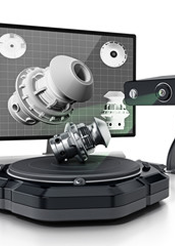
Advanced 3D scanning technology captures precise measurements of existing parts or complex geometries. We create accurate digital models and coordinate machine interfaces to guarantee a perfect fit.
3. Prototyping
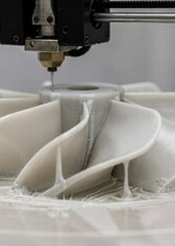
We don’t wait weeks for a third-party machine shop to send back a test block. Our in-house 3D printing capabilities allow us to rapidly print physical prototypes, which lets our engineers test the exact fit on your equipment and catch dimensional clashes before we commit to cutting expensive production tooling.
4. Test & Validate
Comprehensive PPAP (Production Part Approval Process) validation confirms compliance and quality. We support capabilities up to Level 5 to meet even the most stringent customer requirements.
5. Production
We execute full-scale manufacturing with tool tier options tailored to your program’s EAU requirements and budget. Our fabricated thermal insulation products go through rigorous quality checks at every stage.
In-House Tooling Capabilities
Our in-house tooling capabilities include:
3D Scanning
Our advanced 3D scanning technology captures precise measurements from existing parts or complex geometries. We create accurate digital models that serve as the foundation for custom tooling development. The scanning process coordinates and measures machine interfaces to achieve a perfect fit during installation.
Rapid Prototyping
Our in-house 3D printing capabilities accelerate concept validation and reduce time to production. We run internal pre-testing before formal validation phases, which speeds up iteration cycles and helps refine designs efficiently. This capability keeps projects moving forward without external dependencies.
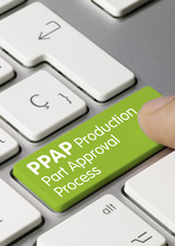
PPAP Validation
We conduct comprehensive Production Part Approval Process (PPAP) validation up to Level 5. This extensive validation meets the most stringent customer requirements and confirms compliance with industry regulations and quality standards. Our thorough approach minimizes risk and builds confidence in production readiness.

On-Site Support
Our dedicated support teams are available for on-site assistance when you need it. We collaborate directly during installation and integration phases to address challenges in real time. Our troubleshooting and optimization support continues throughout your program lifecycle.
How Our Tiered System Optimizes Your Tooling Investment
Not every program requires the same level of tooling investment. We offer multiple tool tier options based on your program’s Estimated Annual Usage (EAU) requirements.
EAU determines the press lifecycle( how many production cycles the tooling must support before replacement). Higher EAU programs need more robust tooling built to withstand extended use. Lower EAU programs can utilize cost-effective alternatives that match actual production volume.
Our tiered approach helps you meet budget constraints without sacrificing program fit. We match tooling investment to the reality of your program instead of overbuilding or underbuilding.
Benefits of Volume-Based Tooling Optimization
Top benefits include:
- Cost-effective solutions matched to program volume.
You pay for the tooling tier that aligns with your actual production needs. This approach eliminates unnecessary upfront costs while maintaining the performance your program requires. - Quality assurance regardless of tier selection.
Every tier receives the same rigorous validation process and quality controls. Lower-tier tooling doesn’t mean compromised quality; it means right-sized investment. - Flexibility to scale up as production needs evolve.
As your program grows, we can transition to higher-tier tooling without starting from scratch. This scalability protects your initial investment and supports a long-term partnership.
Why In-House Tooling Matters
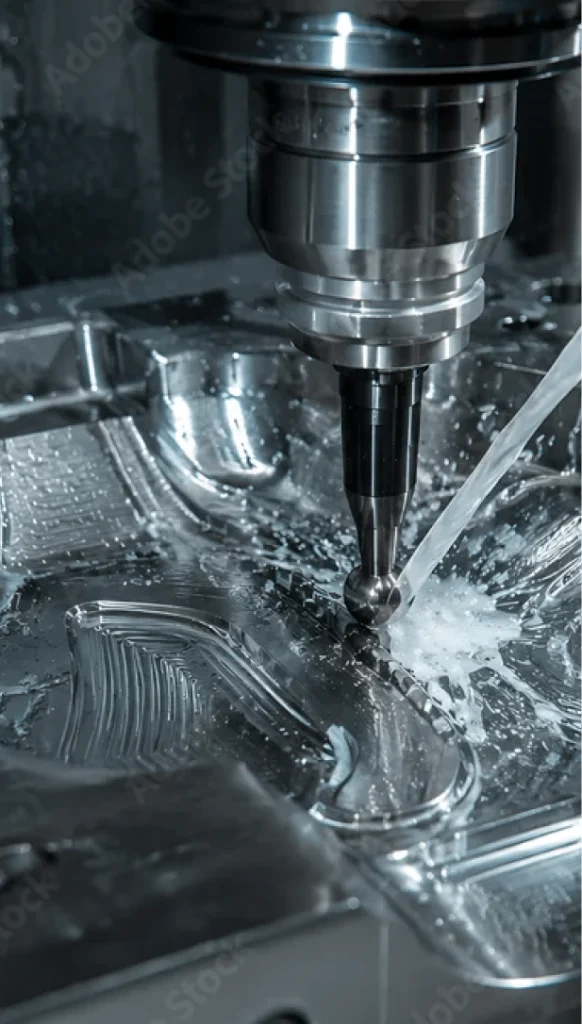
Many thermal insulation design providers outsource their tooling needs, which creates delays, communication gaps, and quality control challenges. When multiple vendors handle different phases, projects stall at handoff points, and accountability becomes fragmented.
We eliminate these issues by keeping the entire process under one roof. Our in-house tooling capabilities deliver measurable advantages:
Faster turnaround times with no third-party coordination delays.
Direct control over the tooling schedule means we respond immediately to changes or challenges. There is no waiting for external vendors to fit your project into their queue.
Direct communication between engineering and tooling teams.
Our application engineers and tooling specialists work side-by-side. This proximity eliminates the translation errors that occur when requirements pass through multiple organizations.
Complete quality control throughout the process.
We maintain visibility and control from initial scan through final production. Quality standards remain consistent because the same team oversees every phase.
Reduced costs by eliminating outsourcing markups.
Third-party tooling vendors add markup to cover their overhead and profit. Our integrated approach removes these intermediary costs and passes savings directly to you.
Seamless integration with engineering and manufacturing teams.
Tooling doesn’t exist in isolation. Our in-house structure allows engineering, tooling, and manufacturing to collaborate continuously and adjust as programs evolve.
Partner with Team OCTI for Your Tooling Needs
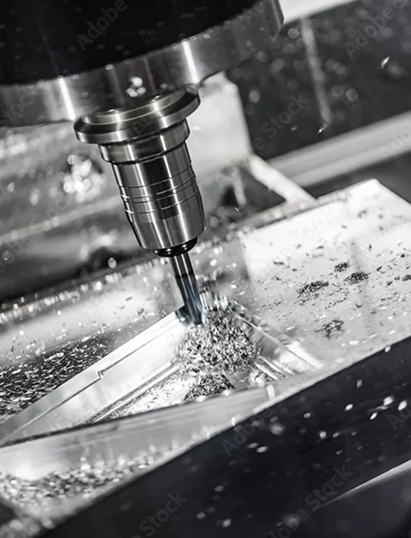
Our combined capabilities of in-house tooling support, rapid prototyping, 3D scanning, PPAP validation up to Level 5, and flexible tiering based on EAU create a unified value proposition for OEM programs. You work with a single partner who controls every phase instead of managing multiple vendors with conflicting priorities.
While competitors outsource tooling and add delays at every handoff, we keep support in-house for speed and control. This integrated approach translates to faster time-to-market, better quality assurance, and lower total program costs.
With decades of experience and comprehensive in-house capabilities, we serve as your trusted partner for custom tooling solutions. Our combination of 3D scanning, rapid prototyping, PPAP validation, and flexible tool tier options sets us apart as a thermal blanket manufacturer that controls the entire development and production process.
Whether you need a single prototype or full production tooling, we have the capabilities to deliver on time and on budget. Our engineering team, tooling specialists, and manufacturing experts work together to create solutions that meet your exact specifications.
Ready to discuss your tooling needs? Contact our team to learn how our in-house capabilities can accelerate your next program.